Fossils Corner

Traces of ancient life

Fossils are the preserved remains of plants and animals that lived millions of years ago โ€” frozen in stone forever.

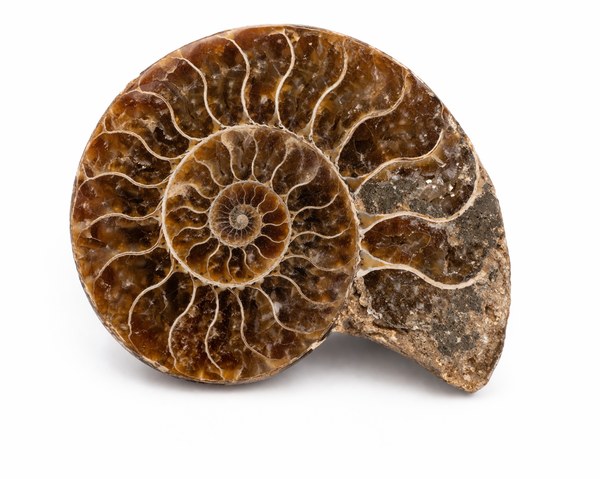
Ammonite
Ancient sea creature โ€” lived 66 million years ago!
Leaf Fossil
Plants preserved in rock โ€” a window into ancient forests
Dinosaur Bone
Real bones turned to stone over millions of years
Learn more
Fossil profiles
Stories from millions of years ago.
๐Ÿš

Ammonite

Ammonites were sea creatures related to today's nautilus and octopus. They had beautiful spiral shells and lived in the oceans for over 300 million years โ€” until they went extinct along with the dinosaurs 66 million years ago.

Their fossils are some of the most common and recognizable in the world. Some ammonite fossils are tiny, while others are bigger than a car tire!

Lived: 400 - 66 million years ago

Leaf Fossils

Leaf fossils give us a window into ancient forests. When a leaf falls into mud or sediment, it can be preserved in incredible detail โ€” sometimes you can see every vein and edge perfectly.

By studying leaf fossils, scientists can figure out what the climate was like millions of years ago. Big leaves with smooth edges usually mean warm, wet weather. Small leaves with jagged edges mean it was cold!

Found on every continent, including Antarctica!
๐Ÿƒ
๐Ÿฆด

Dinosaur Bones

When a dinosaur died and was quickly buried by mud or sand, its bones could be preserved. Over millions of years, minerals seeped into the tiny spaces in the bone, replacing the original material with rock. The bone kept its exact shape but became solid stone!

The largest dinosaur bone ever found belonged to an Argentinosaurus โ€” its thigh bone alone was over 2 metres long.

Dinosaurs lived: 230 - 66 million years ago

How are fossils made?

1
An animal dies
The animal or plant dies near water or in a place where it can be buried quickly.
2
Buried in layers
Sand, mud, and sediment pile up on top, protecting it from decay.
3
Minerals replace
Over millions of years, minerals seep in and replace the original material.
4
Discovery!
Wind, rain, or people digging eventually expose the fossil at the surface.

Did you know?

The oldest fossils ever found are over 3.5 billion years old! They're tiny bacteria called stromatolites. That means life on Earth is almost as old as the planet itself.